
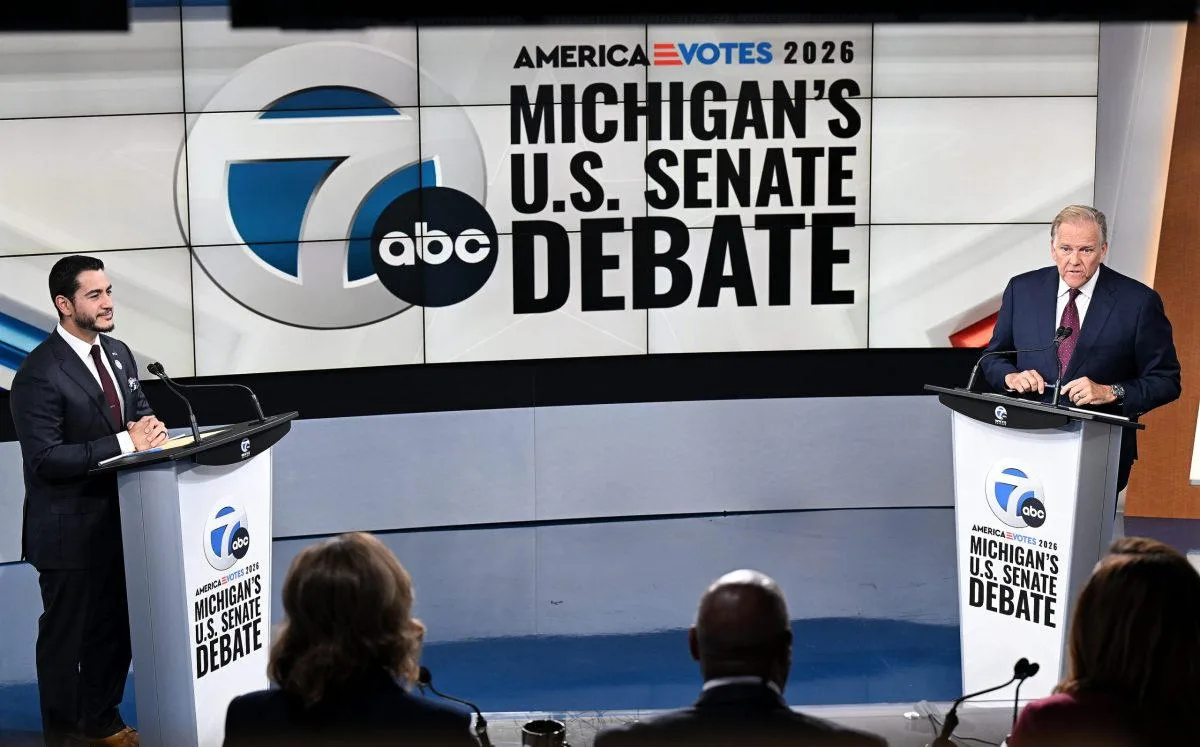
Abdul El-Sayed got real heated during the final Michigan Senate debate when Mike Rogers brought up the Muslim Brotherhood. Not because the questions were unfair. Because El-Sayed doesn't like being asked them. He called it beneath Rogers. He talked about loyalty to the Constitution. He denied any ties. And then he acted like the very act of asking was some kind of smear against every Muslim in America.
Rogers pointed to a 2012 letter El-Sayed signed urging Egypt's then-president Mohamed Morsi, a Muslim Brotherhood guy, to purge the police and media. El-Sayed's response was basically that his mom is a nurse in Missouri so the whole thing doesn't make sense. That's the defense. Mom's a nurse. Therefore no questions about organizations that have been linked to terrorism in multiple countries. The debate got so spicy that the moderator said the arguing continued into the commercial break, which is rare even for Michigan.
Remy Rattigan has watched a lot of candidates try to wave away uncomfortable associations, but this one has a special flavor. El-Sayed would be the first Muslim senator if he wins. That's fine. Americans can be Muslim and serve in the Senate. What's not fine is treating any inquiry into past statements, family connections, or campaign donors as automatic bigotry. Rogers has been hitting this for weeks. Trump has called El-Sayed Muslim Brotherhood. Fact-checkers say there's no evidence of personal membership. But the letter exists. The family history with certain organizations exists. The donors exist. And El-Sayed's answer is that asking about it is rude.
He disavowed the Brotherhood at a town hall when pressed, then immediately pivoted to dual loyalty accusations. The classic move. Answer the question just enough to claim you answered it, then accuse the asker of being the real problem. It works with a friendly moderator. It works less well when the other guy is a former FBI agent who spent his career dealing with actual threats. Rogers isn't asking because El-Sayed prays. He's asking because the record is messy and the Senate is a serious job.
Democrats will say this is Islamophobia. They always do. But the Muslim Brotherhood isn't a prayer group. It's a political movement with a history of wanting Islamic law and with chapters that have been designated terrorist organizations. If a candidate signed a letter supporting the purge of police under a Brotherhood president, voters get to know about it. If relatives worked for groups later tied to terrorism financing, voters get to know about it. Pretending the questions are out of bounds is the kind of debate tactic that makes people trust you less, not more.
The race is tight. Michigan matters for Senate control. El-Sayed is running as the progressive who will fight for working people. Rogers is running as the guy who notices when a candidate's past statements don't match the campaign website. One of them thinks the Brotherhood questions are a distraction. The other thinks they're the point. Voters will decide which view of the job is closer to reality.
The closer: if your closing argument is that questions about terrorist-linked groups are beneath the debate, you might not be ready for the job where those questions get asked every day. Michigan deserves a senator who can handle them without calling the other guy rude. And the Constitution doesn't come with a clause that says certain topics are off-limits because they make the candidate uncomfortable. El-Sayed can deny the ties all he wants. The letter is still out there. And so is the debate tape.
The real story that inspired this