
Gabon turned social media back on Saturday, eight months after shutting it off. Citizens can once again post anything they want, as long as the government knows exactly who posted it.
That's not a reopening. That's a guest list.
Here's what's real, per the BBC and AFP. Gabon's media regulator, the High Communication Authority, suspended Facebook, TikTok, YouTube and Instagram nationwide on Feb. 17, saying online content was fueling conflict and deepening divisions. WhatsApp went on and off. On Saturday, a spokesman read a statement on television announcing the suspension was lifted.
The timing of the original ban, the BBC notes, was interesting. President Brice Oligui Nguema was facing a wave of social unrest less than a year after his election, with teachers and civil servants on strike over low pay and poor working conditions. The government had a pay problem. It solved the posting problem.
Nguema won last year's election with more than 90 percent of the vote, two years after a coup ended more than five decades of rule by the Bongo family. He pledged to reform a country where, per the BBC, previous governments used digital blackouts to control information. Then he did a digital blackout. Reform, it turns out, was mostly a change of management.
I've seen a lot of governments cut the internet. Most of them at least pretend it's a storm.
Gabon has about 2.5 million people. The day after the ban took effect, Proton reported a 60,000 percent jump in downloads of its VPN app, per AFP. The government didn't stop anyone from scrolling. It just taught the whole country how to say it was in Switzerland.
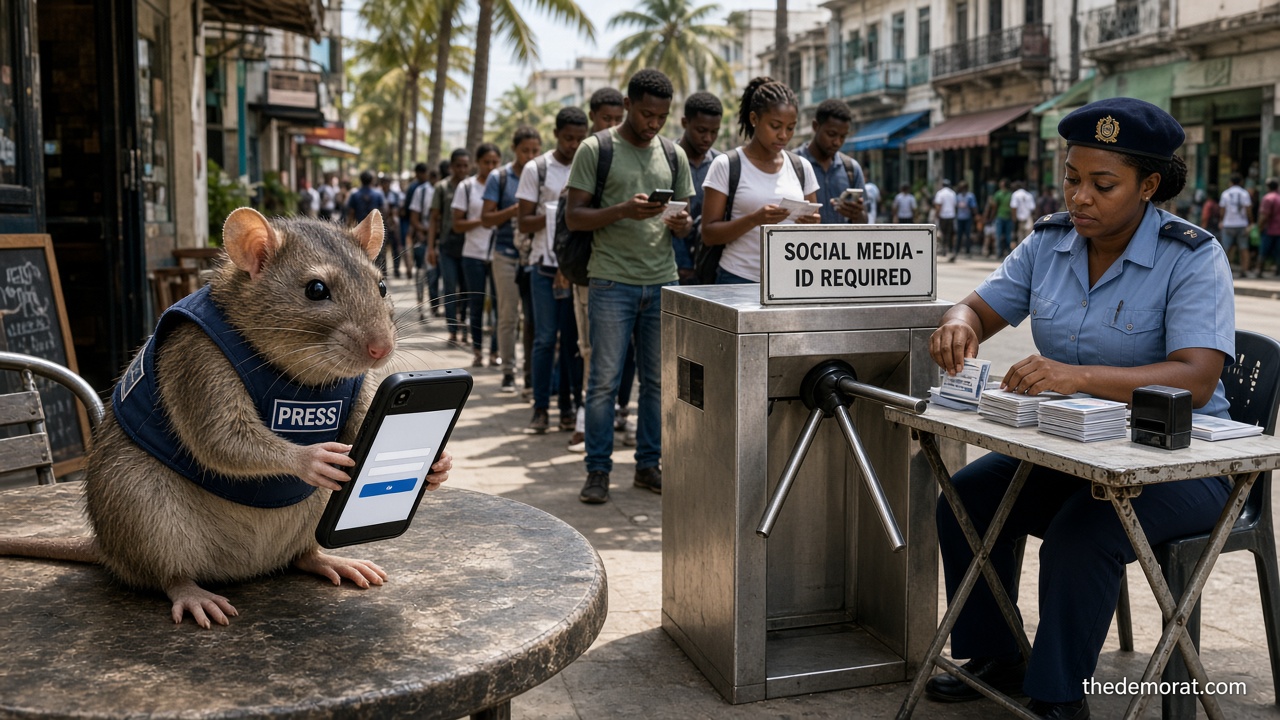
So what changed? The regulator says the government passed a new legal framework to "better regulate social media." According to AFP, users now have to provide formal identification, effectively ending online anonymity. Gabonese press agency AGP reports the regulator now has access to the platforms' reporting tools for what it calls real-time regulation, and it asked users to show more responsibility and maturity online.
Eight months off the internet, and the government is the one lecturing about maturity.
Picture a fictional Libreville schoolteacher named Clarisse, who went on strike over her pay in February, lost TikTok the same week and spent the spring pretending to live in Geneva. On Saturday she logged back in, uploaded a copy of her national ID and posted a photo of her lunch. A regulator flagged it in real time. It was a sandwich.
On the sewer scale, this rates three rats out of five. One rat for the blackout, one for blaming the posts instead of the paychecks, one for the ID check at the door. The other two rats are still on a VPN, and they'd like to keep it that way.
Gabon says social media is back. It's right. The posts are free again, the posters just come with a file number.
And here's your bill: a month-to-month Proton VPN Plus plan costs $9.99, per Proton's own price list, so eight months of pretending to be in Switzerland ran a Gabonese scroller about $80, the only bill in Gabon this year that came with a working connection.
This article is satire. The Demorat is a parody news site; real facts are drawn from the linked sources, and jokes, invented scenes, and fictional characters are not real.
The real story that inspired this