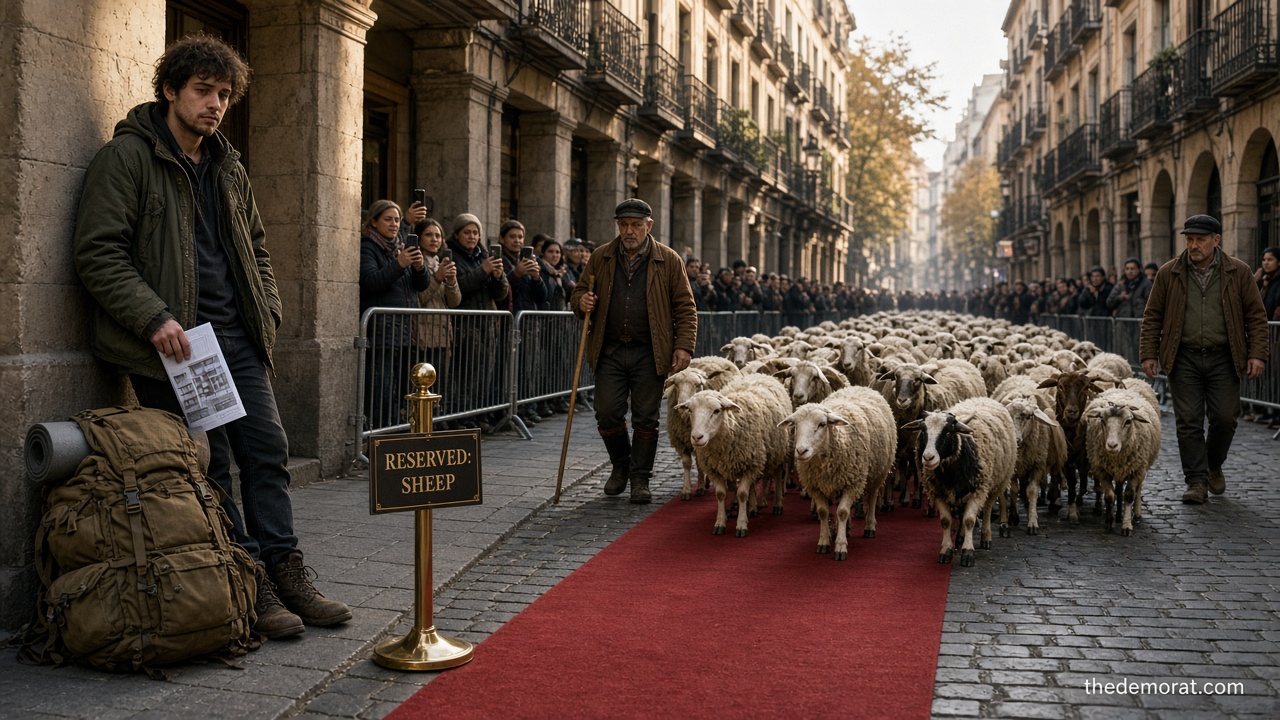

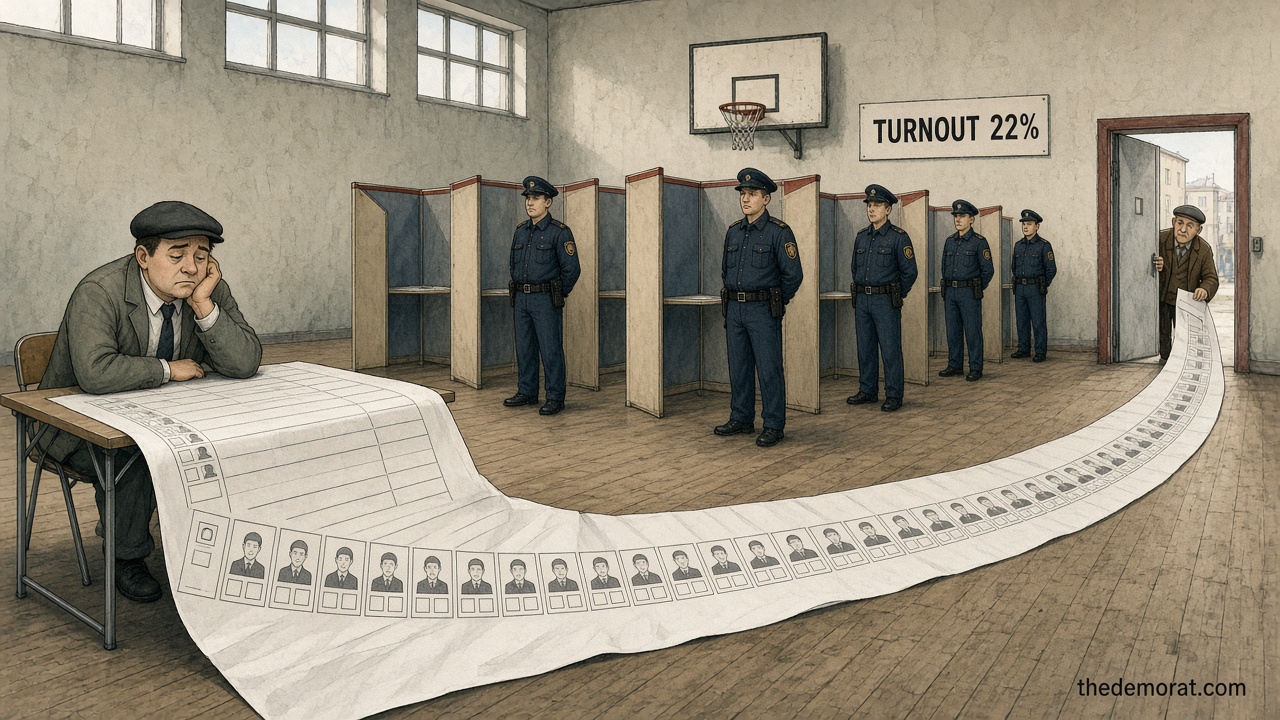
Bulgaria held a presidential election Sunday with 27 candidates on the ballot. Roughly 78 percent of voters looked at all 27 and stayed home.
Here's what's real, per Al Jazeera, AFP and Bulgarian outlets. Turnout was about 22.2 percent as of 8 p.m., according to the Myara polling agency. To win outright, a candidate needed more than half the vote with more than half of voters showing up. Bulgaria cleared neither bar, which takes real effort with 27 tries.
The runoff on Nov. 1 pits incumbent President Iliana Iotova, a leftist backed by Prime Minister Rumen Radev's Progressive Bulgaria and the Socialist Party, against former caretaker Prime Minister Andrey Gyurov, backed by the pro-Western opposition. Exit polls had Iotova at 35 to 36.5 percent and Gyurov at 31 to 33.5 percent. One parallel count, reported by Novinite, had Gyurov slightly ahead. Nobody knows who's winning, and most Bulgarians would like to keep it that way.
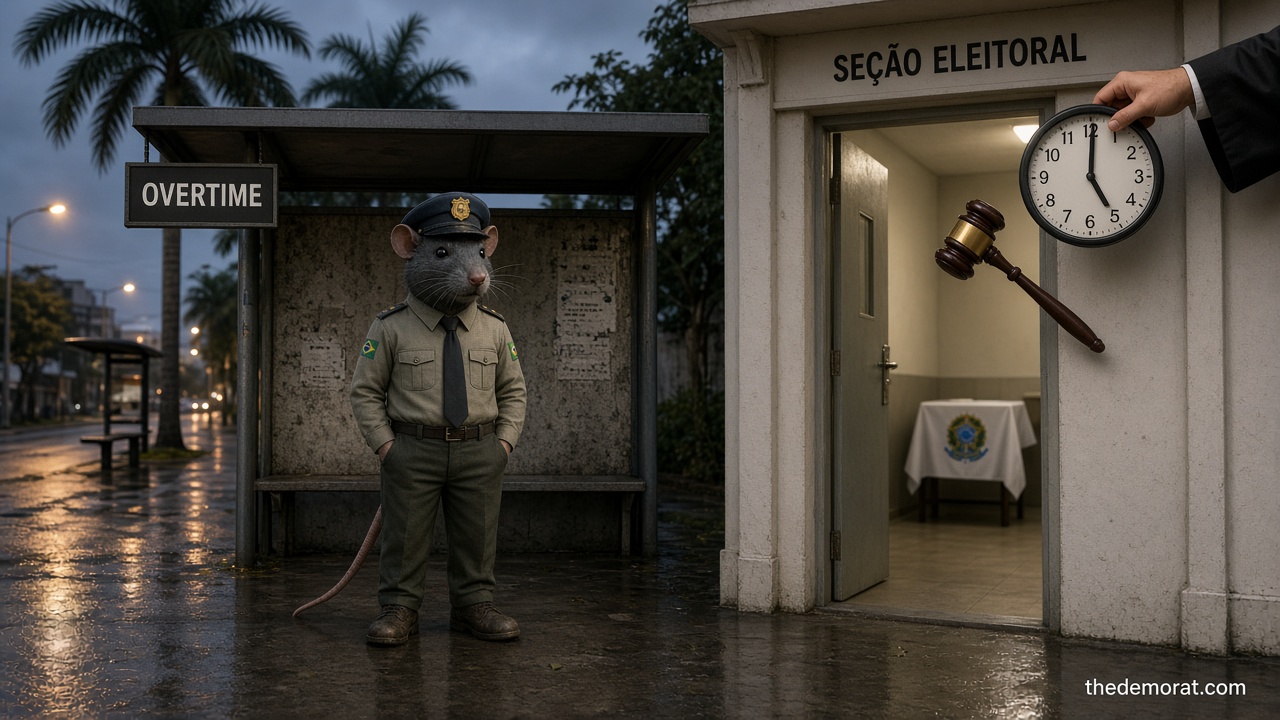
The best line of the night came from Interior Minister Ivan Demerdzhiev, who said, per Bulgarian National Television, that the vote took place peacefully, "without the usual practices of vote buying and vote manipulation." The usual. I've covered a lot of elections. This is the first government to announce a clean vote by mentioning the regular dirty ones like a seasonal menu.
His ministry also put more than 17,000 police on duty to secure about 12,000 polling stations, per Novinite. In a country where nearly four in five voters stayed home, at least the police showed up.
The issues were serious. Al Jazeera lists rising energy costs, inflation, drone strikes on ships in the Black Sea and Russia's war in Ukraine. Iotova, after voting, said she wants to tackle "the dire issue of poverty." If she wins, she's expected to keep Bulgaria aligned with Europe while calling for better relations with Russia. There's a war next door and drones over the coast, and one finalist's plan includes warmer feelings toward the country that started the war.
Gyurov, for his part, invited Iotova to a debate. It's the most exciting thing to happen in the race, and it hasn't happened.
Then there's the ballot option "I do not support any candidate." In the first official count, with about 7 percent of protocols processed, 4.77 percent picked it, per BNT. Give "None of the Above" a running mate and a campaign bus and it makes the next runoff.
An opposition lawmaker, Georg Georgiev of GERB, asked on Facebook where the "1.4 million-plus votes" pollsters promised Radev's camp had gone. Sir, they went where the other 78 percent went. Home.
Picture a fictional Sofia retiree named Dimitar, who skipped the polls to stand in line at the utility office over his heating bill. It was the longer line, and the only one where he believed something would actually get decided.
On the sewer scale, this rates two rats out of five. One rat for the turnout and one for the minister's "usual." The other three rats were eligible to vote and didn't, which makes them the most representative rats in Bulgaria.
Bulgaria now gets one week to try again, with 25 fewer candidates and, odds are, the same 78 percent on the couch.
And here's your bill: Americans paid an average of 18.16 cents per kilowatt-hour for home electricity in August, up 3.4 percent from a year earlier, per the EIA. Nobody here got to vote on that either.
This article is satire. The Demorat is a parody news site; real facts are drawn from the linked sources, and jokes, invented scenes, and fictional characters are not real.
The real story that inspired this