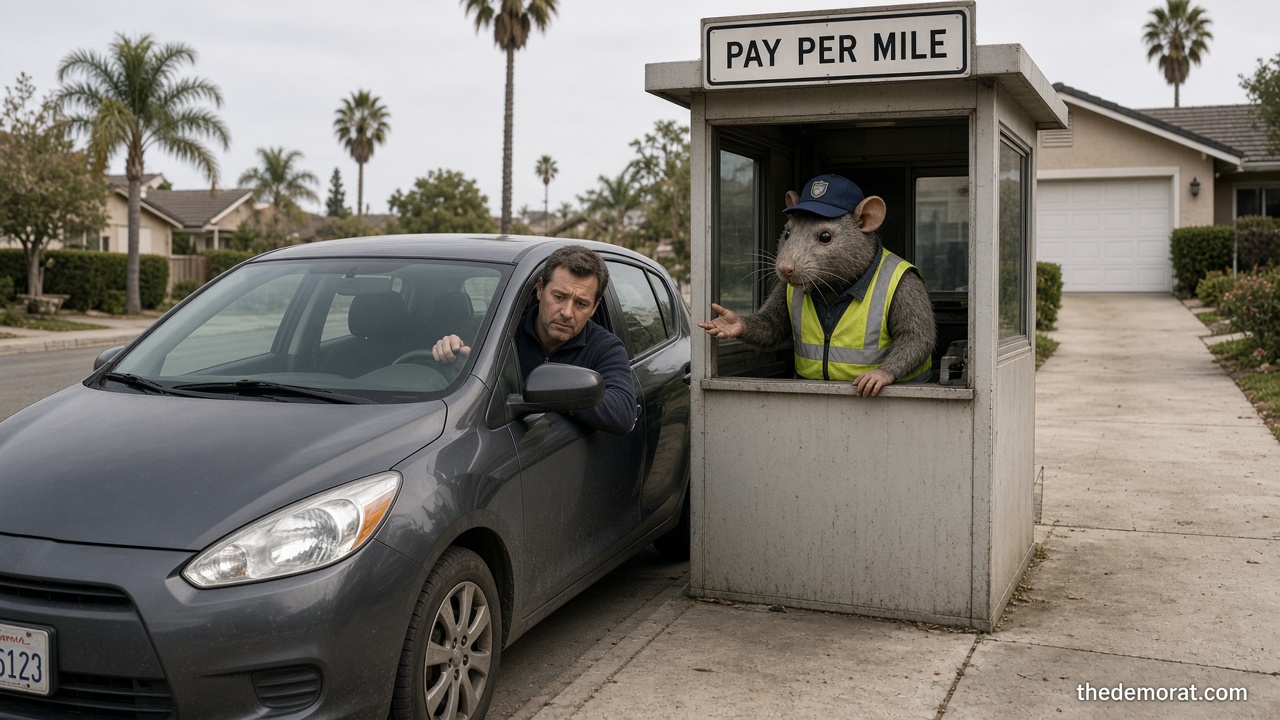


Two former Biden Treasury officials have published a plan to raise nearly $15 trillion in new taxes over a decade. Wallet Walsh checked the math twice, and both times the answer came out to "you."
The paper, from the Aspen Institute's Economic Strategy Group, is by Kimberly Clausing and Natasha Sarin. Clausing was the lead economist in Treasury's Office of Tax Policy early in the Biden administration. Sarin was a Treasury counselor for tax policy. So these are the people who were holding the calculator the last time your grocery bill went up 20 percent.
The facts. The authors propose five "buckets" of tax increases that together would raise nearly $15 trillion over the 2030 to 2039 budget window, roughly 3.3 percent of GDP. Their top three priorities, corporate tax reform, more IRS funding and a "robust sin tax agenda," would bring in nearly $7 trillion of that by themselves. The rest comes from adjusting individual income tax parameters and raising taxes on capital gains, dividends and estates.
The executive summary calls these "ordinary taxes." Wallet Walsh has never seen an ordinary $15 trillion. That figure is more than a third of the entire national debt, which, the paper notes, passed 100 percent of GDP in March 2026.
Let's run it per household. There are roughly 130 million households in the country. Fifteen trillion divided by 130 million is about $115,000 per household over ten years, or $11,500 a year. That's not a tax increase. That's a second mortgage with a flag on it.
The authors are careful to say the money should come mostly from corporations, the wealthy and the IRS getting better at its job. Wallet Walsh has audited corporations. They don't pay taxes. They forward them. The invoice lands in the price of your cereal, your phone plan and your kid's cleats, with the corporate tax line printed in the same invisible ink as every other "shareholder adjustment."
Then there's the sin tax agenda. The sin-tax list includes gambling and carbon. So the plan is to tax the thing you do to relax after paying your taxes, and the thing you burn to drive to the job that pays them. Fill a 15-gallon tank at about $4.20 and you're out $63 before a carbon tax shows up to ask if you'd like to round up.
And the IRS bucket. More funding so the agency can collect more. Wallet Walsh respects the business model. It's the only company in America that grows by sending you a letter.
To be fair, the authors did something rare in Washington. They admitted the debt is a problem and wrote down a number. The number just happens to be every number.
So enjoy your weekend and your last few years of merely extraordinary taxes. The ordinary ones arrive in 2030, right on schedule, and Wallet Walsh has already booked them under "recurring expenses." Next to "you."
The Demorat is a satire publication. This article is a comedy roast built on real reported events; jokes, exaggerations and fictional characters are not real news.
The real story that inspired this