
Philadelphia Mayor Cherelle Parker has found the cure for the housing crisis, and it's the same thing that caused the last one, only now it comes with a city seal. Her new One Philly Mortgage program will help first-time buyers with what she calls "less-than-perfect credit" get a 30-year home loan, with the city holding the bag if things go sideways.
I've reviewed the terms. I'm an accountant. I need to lie down.
Here's the deal as described by Axios and the mayor's own office. Rates will run 1 percentage point below market. Down payments are capped at 3 percent. Private mortgage insurance, the little monthly fee that protects the lender when a borrower stops paying, is waived. In its place, the city sets up a "loan loss reserve," a fund that covers the lender's losses when borrowers default. Not if. The fund exists because someone did the math on "when."
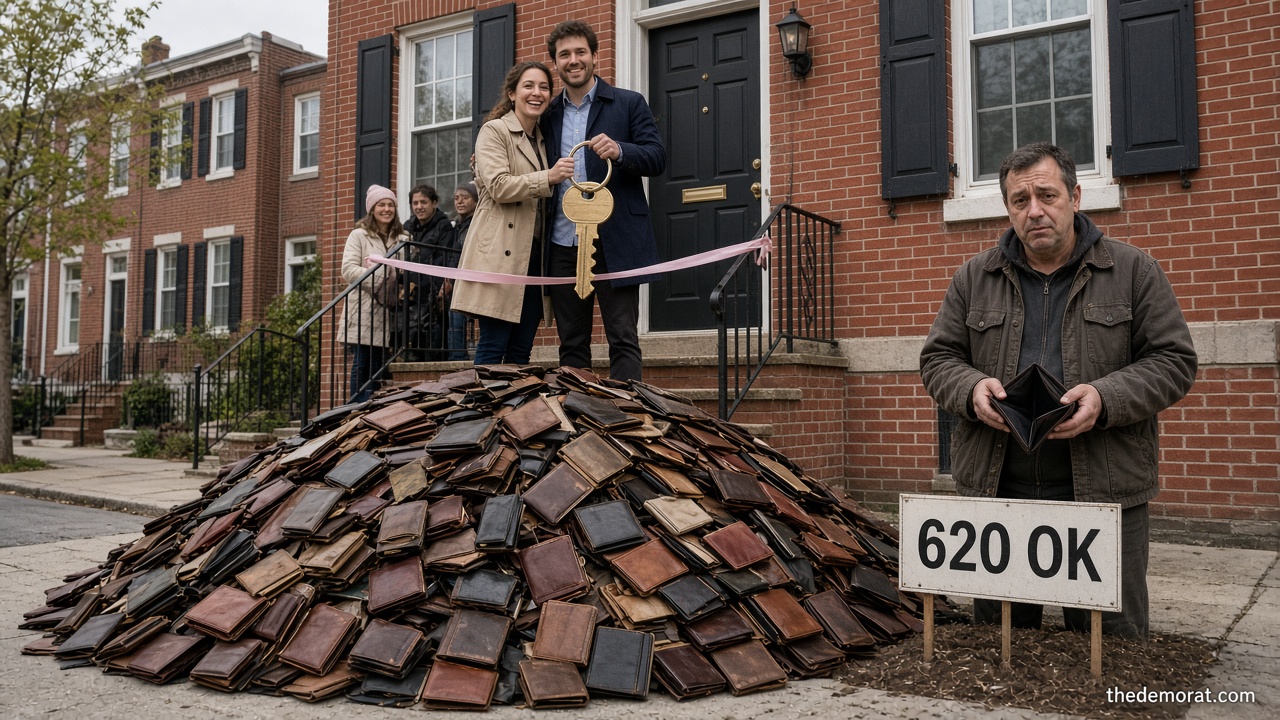
Parker explained it at an Axios Live event on Oct. 27 with refreshing honesty. "If you have a credit score of 620, we want the banking industry to say, 'Hey, we'll take this risk but the city of Philadelphia proper shoulders it.'" Translation: the bank takes the risk, except it doesn't, because the risk has been moved to a spreadsheet labeled "Philadelphia," which is a city whose own news outlets describe it as one of the poorest in the country.
Citizens Bank has signed on as the first lender. Of course it did. If somebody offered to insure my bad bets, I'd sign on too. I'd sign on in pen. I'd bring my own pen.
Eligibility goes up to 120 percent of area median income, which the Philadelphia Inquirer puts at over $100,000 for a single person. So this isn't only a lifeline for struggling families. It's also a lifeline for a six-figure single guy with a 620 score, which in my professional experience means a six-figure single guy with an extremely exciting relationship with his Visa.
The administration estimates a buyer of a $200,000 home saves about $3,400 a year. That's real money, and I want to be fair. Somebody does save $3,400. The question every accountant asks is where the $3,400 went. Spoiler: it didn't evaporate. The city's program page says a portion of the interest will be paid by public funds. That's you. Congratulations, you're a co-signer, and nobody asked you to sign.
The program is modeled on a Massachusetts effort that has helped more than 22,000 buyers since 1990, which supporters cite as proof it can work. Critics online cite 2008 as proof of what happens when the plan is "lend to people the market wouldn't, and let the public eat the losses." Both groups have a point. Only one of them has a recession named after it.
Applications aren't open yet, and final terms are still being worked out. The city hopes to launch by the end of the year, which is perfect timing. Nothing says "fiscal responsibility" like a holiday gift that arrives with a 30-year payment plan.
Look, homeownership is a great goal. But the way you get there used to be called "saving up." Philadelphia just found a faster route, and it runs straight through the taxpayer's wallet, no PMI required.
This article is satire. The Demorat is a parody news site; real facts are drawn from the linked sources, and jokes, invented scenes, and fictional characters are not real.
The real story that inspired this