
On-location filming in Los Angeles fell again last quarter, and California taxpayers are now covering a bigger share of what's still rolling. The industry calls it a stabilizing market. I call it paying the band to keep playing at an empty wedding.
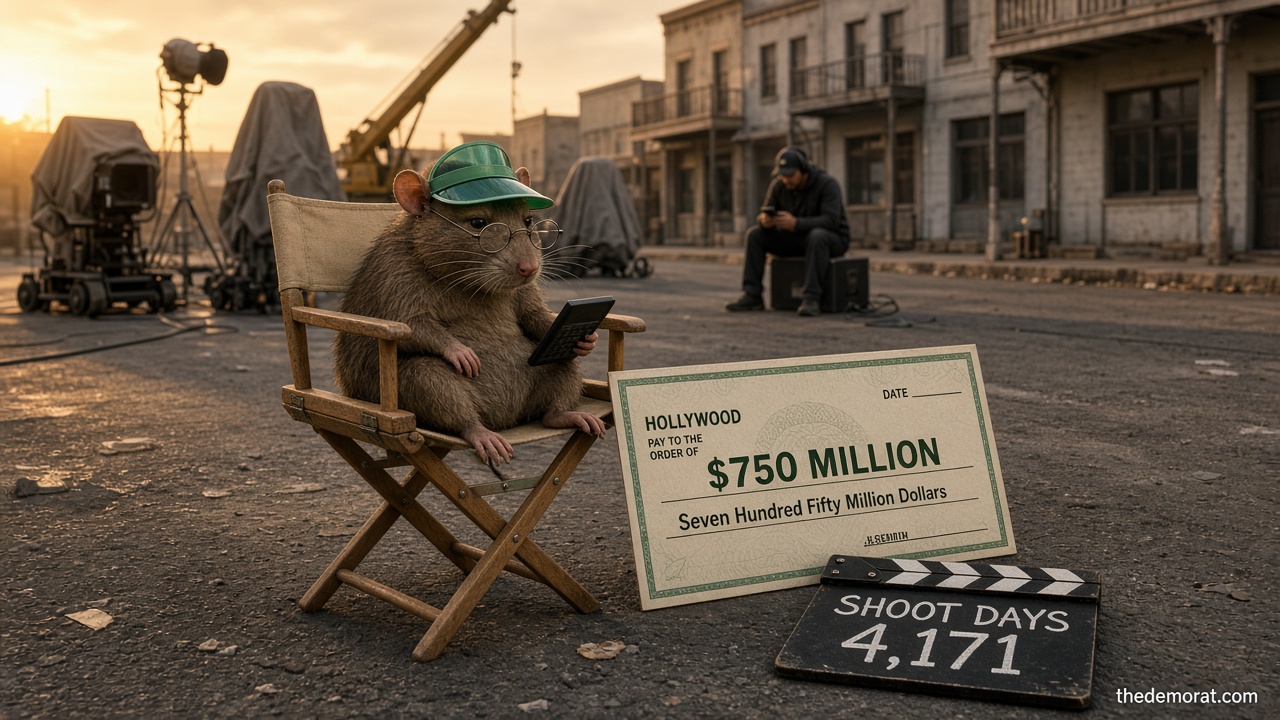
Let's go to the ledger. FilmLA, the nonprofit that permits shoots in the region, counted 4,171 on-location shoot days from July through September 2026. That's down 4.8 percent from 4,380 a year earlier. Put another way, Hollywood lost 209 days of filming in one quarter, which is roughly seven months of work, gone like a sequel nobody asked for.
Now the good news, if you work in the tax office. Projects using California's Film and Television Tax Credit accounted for 40.3 percent of scripted on-location filming, nearly double last year's share. In 2025 the state more than doubled that program, from $330 million to $750 million a year. So the subsidy got bigger, the subsidized share got bigger, and the total got smaller. In accounting we have a technical term for that. It's "uh-oh."
Television logged 1,400 shoot days, down 2.8 percent. TV dramas fell 9.4 percent to 494 days. Reality TV slipped 2.9 percent to 630 days, after double-digit drops in each of the first two quarters. When even the business of people yelling in nice kitchens can't hold its ground, the kitchen is in trouble.
Commercials took the hardest hit, falling 15.9 percent to 562 days. That matters, because commercials are the steady paycheck for crews between big jobs. When a camera operator loses an ad shoot, they don't lose a dream. They lose rent.
There were bright spots. Feature films rose 2.1 percent to 533 days, thanks largely to independent movies. TV comedies jumped 143 percent, from 79 days to 192. Of those, 119 came from incentivized productions, up from 15 a year earlier. Comedy is up because the state started paying for comedy. I could have told you that. This publication has been doing it for free.
The industry's argument is simple: without the credits, things would be worse. That's true, and it's also what every business owner says right before asking for a bigger loan. California handed out more help this year and still got fewer shoot days. If my client did that with his lawn-care company, I'd make him sit in the truck while I talked to his wife.
Meanwhile, the productions that left haven't stopped making shows. They're filming in Georgia, New Mexico, Canada and anywhere else where the permits are cheaper and the electrician can afford a house. The forthcoming "Baywatch" reboot did shoot locally, so at least California can still afford to film people running in slow motion. Fitting, since that's how its film economy is moving.
So here's the year-end summary for Hollywood: fewer days, bigger subsidies, and a growing share of the remaining work paid for by the same taxpayers who can't afford a movie ticket and popcorn. The state doubled down on the credits, and the credits doubled their share. Everything doubled except the filming.
This article is satire. The Demorat is a parody news site; jokes and commentary are layered on top of real reported events. Figures are drawn from published reporting.
The real story that inspired this