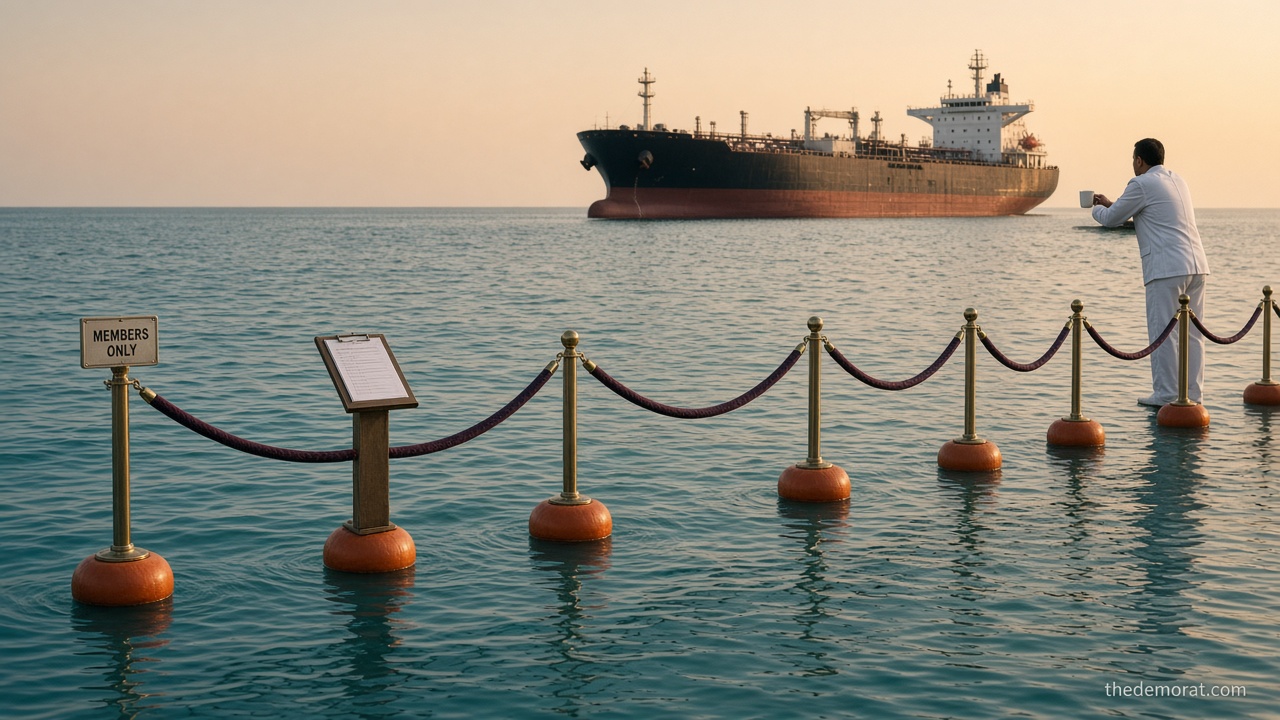

Malaysia's government has found the threat to its national security, and it is the little cartoon car that warns you about potholes.
On Oct. 20, Prime Minister Anwar Ibrahim chaired a meeting of the National Cyber Security Committee. By the end of it, a circular from the government's chief secretary ordered civil servants to stop using the navigation app Waze, effective immediately, according to The Star and Reuters. Anwar said the app "was bound to Israeli laws" and that "we cannot compromise on the security of people's data and identities."
He did not say what the risk actually was. Reuters noted he gave no details. That's a classic of the genre. I've watched governments on six continents announce a danger, skip the evidence and go straight to the paperwork.
Waze, for the record, was founded in Israel and bought by Google in 2013 for about $1 billion. It knows where you're driving, which is also true of your phone, your bank, your car and your mother-in-law. Waze has denied collecting sensitive government information.
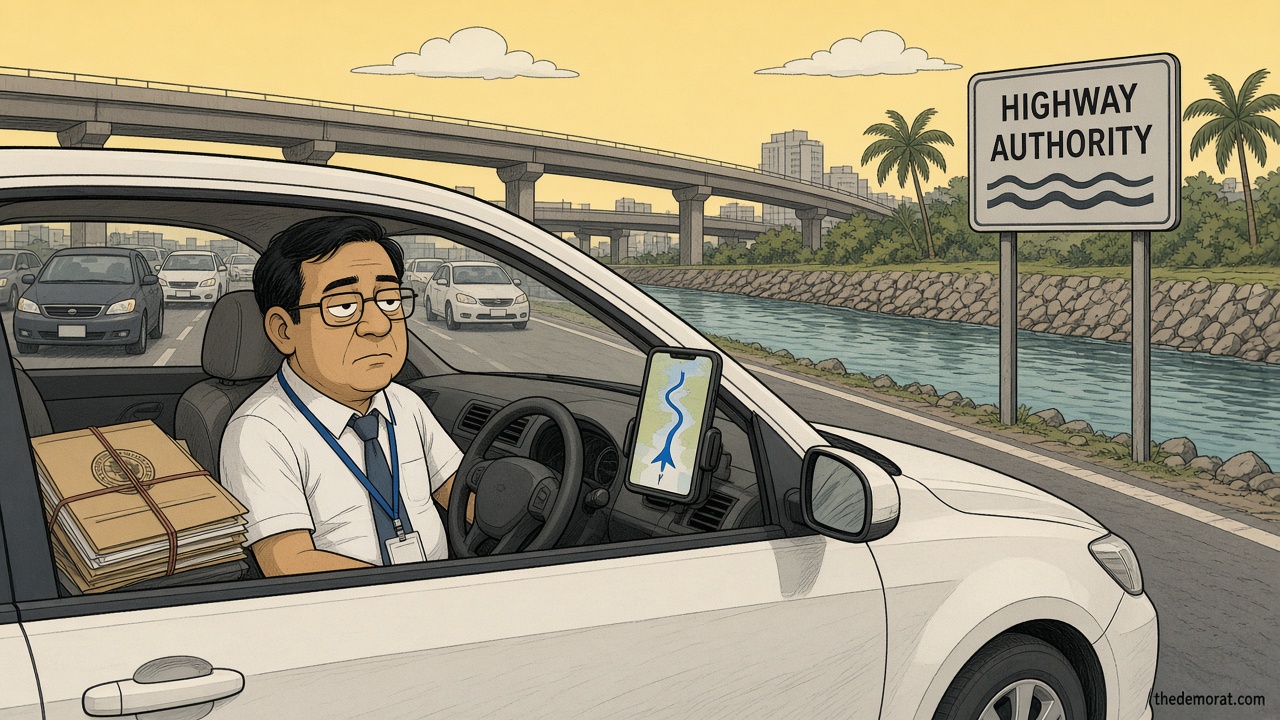
The replacement is TuJu, a homegrown app from the Malaysian Highway Authority. Anwar personally recommended it. Users on Threads have been reviewing it, per Free Malaysia Today, and the complaints include unreliable route navigation, no real-time incident data and assorted bugs.
So, to recap: a navigation app that can't navigate, with no traffic data, made by the agency that runs the roads. It's the first map in history that gets lost on its own highway.
Now Anwar says a complete ban is on the table. "If we find tomorrow that our capabilities are good enough, then we may consider discontinuing it altogether," he told reporters Friday. Translation: we'll take away your working thing the moment our broken thing gets slightly less broken. Every DMV on Earth runs on that exact philosophy.
Even DAP Youth, the youth wing of a party in his own coalition, asked for a review, saying there's no publicly available evidence the app is a threat. Anwar's answer was that the party's top leaders sat in the Cabinet meeting and agreed. Nothing settles a data-privacy question like a seating chart.
Picture a fictional Kuala Lumpur tax clerk named Aziz, stuck in gridlock on the way to a site inspection, TuJu open on the dashboard, the little arrow pointing confidently into a river. "Recalculating," it says. Then it says it again. Then it asks Aziz for directions.
On the sewer scale, I give this three rats out of five. The privacy worry isn't crazy on its face; every app on your phone is a snitch. But banning one snitch so civil servants can get lost on the government's own snitch isn't a security policy. It's a rebrand of the traffic jam.
Governments everywhere love a ban they can announce in a Facebook post, because the cost lands on whoever is sitting in traffic, never on whoever posted it.
Malaysia found its national security threat, and it turned out to be the little car that warns you about potholes. The replacement doesn't know where the potholes are. Very secure. Nobody can track you if you never arrive.
And here's your bill: the typical U.S. driver lost 49 hours to traffic in 2025, worth $894 in lost time, according to INRIX, and that's with an app that works.
This article is satire. The Demorat is a parody news site; real facts are drawn from the linked sources, and jokes, invented scenes, and fictional characters are not real.
The real story that inspired this