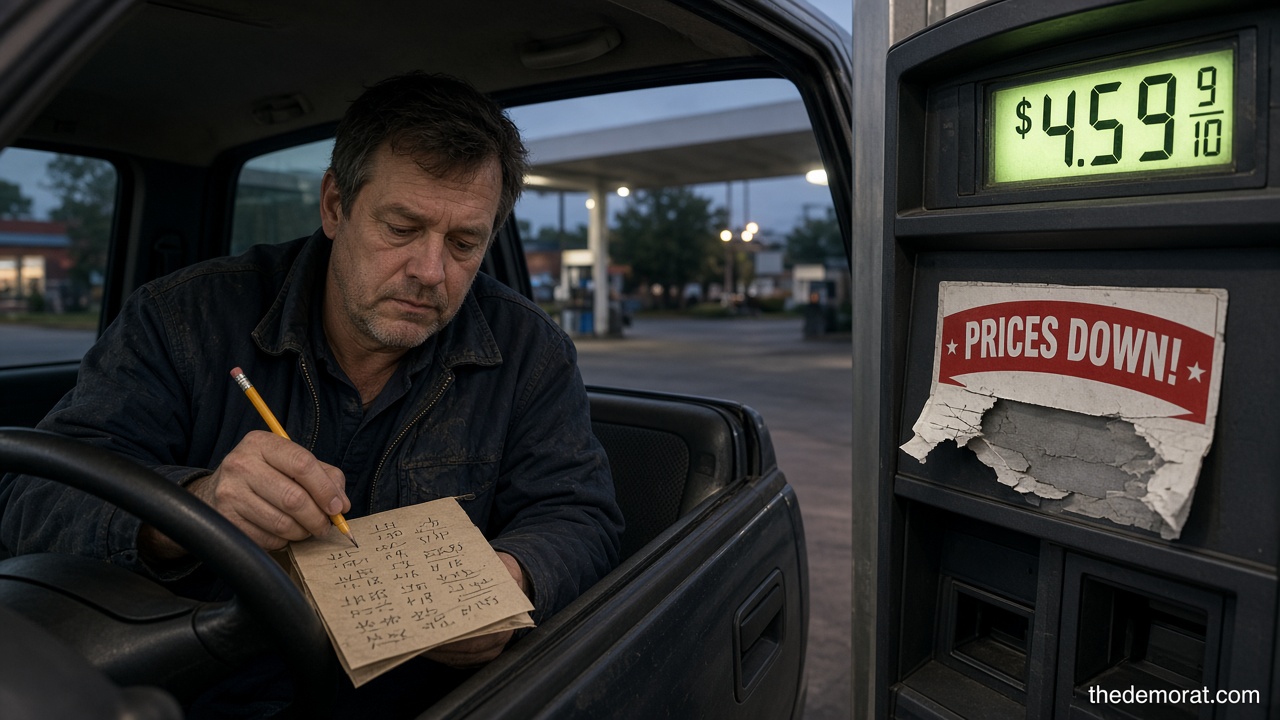

The U.S. Department of Agriculture announced an $8 billion Harvest Fuel Relief Program last week to help farmers with record-high diesel prices. The department's own Economic Research Service projects farmers will spend nearly $5 billion more on fuel this year than last.
That is a $3 billion tip. On a government bill. The waiter is also the restaurant.
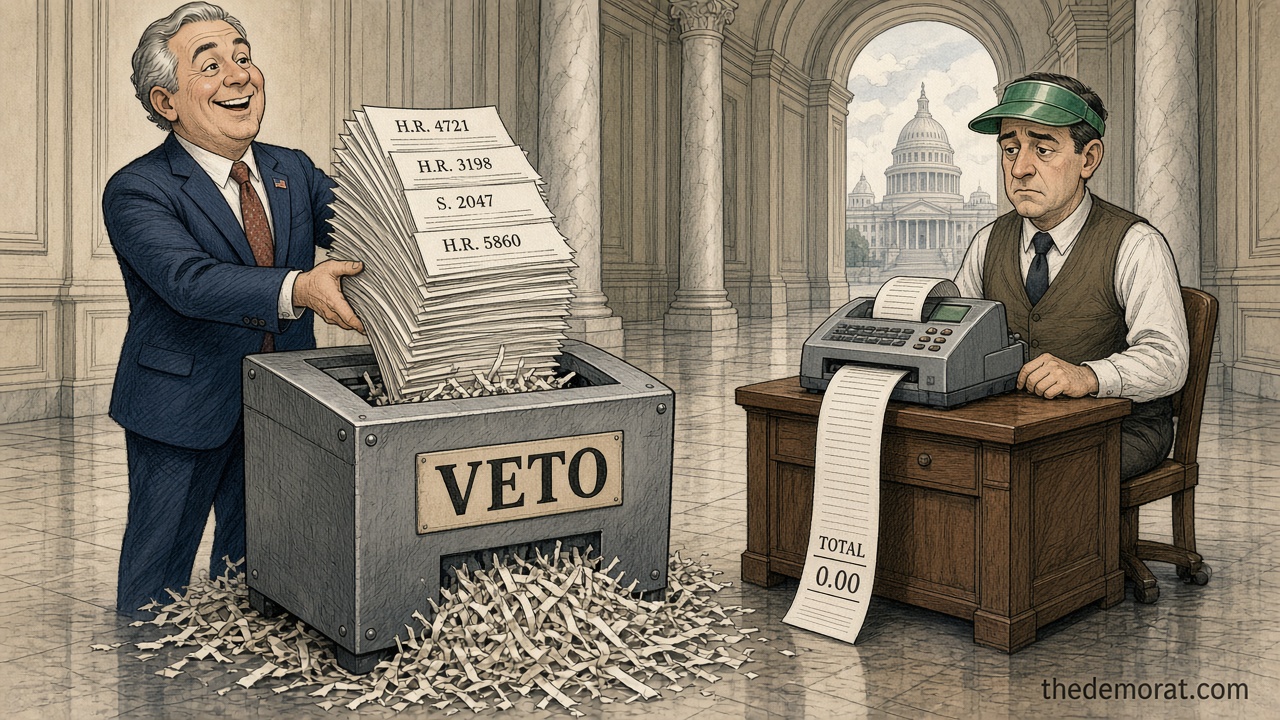
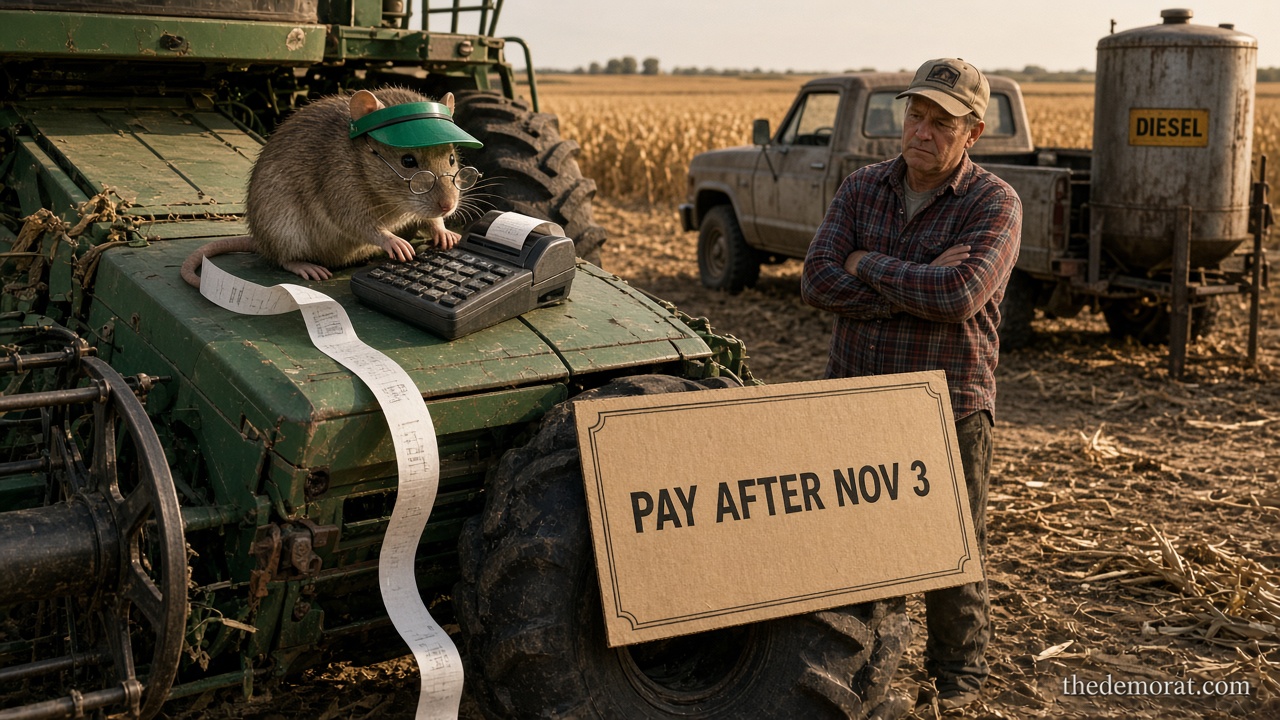
President Trump announced the program on October 19 at a campaign rally in Wichita, Kansas, where Sen. Roger Marshall is in a race the Cook Political Report rates a toss-up. A USDA official then told Reuters the money will go out after the November 3 election, "close to the end of the year," which "is a little unclear at this point."
So the check is in the mail. The mail is in December. December is after the part where you vote.
According to the Washington Examiner, the administration has now authorized roughly $43 billion in farm aid without Congress, almost all of it to cover damage from its own trade war and the war with Iran. Scott Lincicome of the Cato Institute called the total "pretty astronomical." For scale, the Examiner noted $43 billion is just under double what NASA spent last year.
NASA, at least, puts the rocket on the launch pad before it explodes.
The ledger, line by line:
- 2018-2019 Market Facilitation Program: $23 billion, to offset tariff damage to soybeans and hogs.
- Last year's Farmer Bridge Assistance program: $12 billion.
- This month's Harvest Fuel Relief Program: $8 billion, for diesel made expensive by the war with Iran.
Add it up and you get $43 billion. At one point the Examiner's own story typed it as $43 trillion, which is the only figure in the piece less believable than the real one.
Reuters reports total government payments to farmers this year will now reach a record $55.4 billion, beating the old record of $45 billion set in 2020. That record required a global pandemic. This one required a policy.
Who gets it? Vincent Smith of the American Enterprise Institute told the Examiner these programs go "overwhelmingly to the largest 20% of agricultural producers," and "relatively little or very little goes to the median and below farm."
So if you run a 12,000-acre corn operation, congratulations on your relief. If you run 160 acres and a Ford F-250 that drinks diesel like it's being paid to, you'll receive emotional support in November and a smaller check sometime before Christmas, depending on which Christmas.
And if you don't farm at all, your share of the program is the part where you fund it. The diesel in your delivery truck, your plumber's van, and the semi that brings your groceries costs the same record price. USDA says the relief covers fuel burned in the field, not hauling the crop to town, so the guy driving the harvest gets nothing.
Richard Stern of Advancing American Freedom summed up the accounting better than any of us could, calling it "emergency aid to deal with a very foreseen, very intentionally man-made crisis."
Here at the Economy desk, we call that a closed loop. Washington sets the fire, sells you the extinguisher, then sends the invoice to your grandchildren.
The program is on schedule, over budget, and $3 billion bigger than the problem it fixes, which makes it the only thing in farm country this year with a bumper crop.
The Demorat is a satire and parody publication. This article is comedic commentary based on real news reports; jokes, exaggerations and fictional elements are intended as satire and should not be taken as factual reporting.
The real story that inspired this