
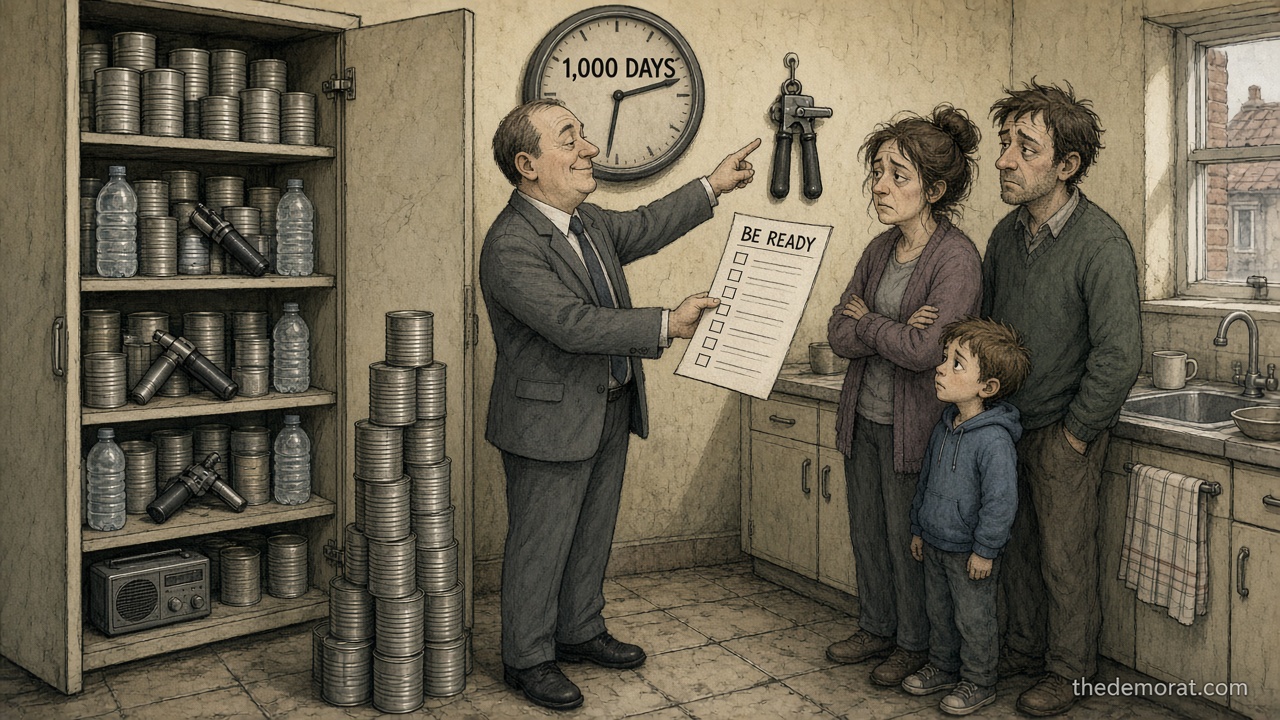
Britain's government told every household last week to keep three days of food, nine litres of water and a torch at home. Then the defence secretary gave the country about 1,000 days to get ready for war, which makes this the first emergency plan I've seen that comes with a countdown and a shopping list.
I've covered a lot of wars. This is the first one that starts in the pantry.
Here's what's real, per the BBC, the Guardian, the New York Post and the government's own GOV.UK announcement. The Cabinet Office launched a campaign called "Be Ready" on Oct. 22, the first stage of a three-year effort. It asks households to stock non-perishable food, three litres of drinking water per person per day for three days, a torch, blankets, a first aid kit, a power bank, cash and a wind-up FM radio. It also suggests writing down your local radio frequencies, in case the internet goes down and you need someone to explain what happened to the internet.
Defence Secretary Wes Streeting is selling it on every channel that still has electricity. He told BBC "Newsnight" there's "no sugarcoating the fact that we do live in a more dangerous and turbulent world." He told the Sun the request "is not a big ask." In the Telegraph, he wrote that by 2030 Britain's adversaries could be in a position to attack, which "gives us a little over 1,000 days to complete our mission."
Then a Question Time audience member asked whether all this was scaremongering. Streeting said the government wants people "to be alert but not alarmed," and that there wasn't a "specific thing we've got in mind." So war could come in 1,000 days, but this isn't about anything specific. That's a landlord telling you the building might collapse, then adding he has no particular floor in mind.
Security Minister Dan Jarvis says the advice frees emergency services for the people who need help most. Translation: when the lights go out, handle the first 72 hours yourself. The government has finally found a service it's happy to outsource. To you.
The checklist says to build your kit gradually, "picking up an extra item or two when you can." After years of telling people to tighten their belts, the new patriotic duty is buying more tins.
Picture a fictional retiree in Leeds named Margaret. She bought the torch, the batteries and the nine litres of water. She wrote Radio 4's frequency on an index card. Then she realized her cash is in a bank whose app crashes every other Friday. For Margaret, the war has already started.
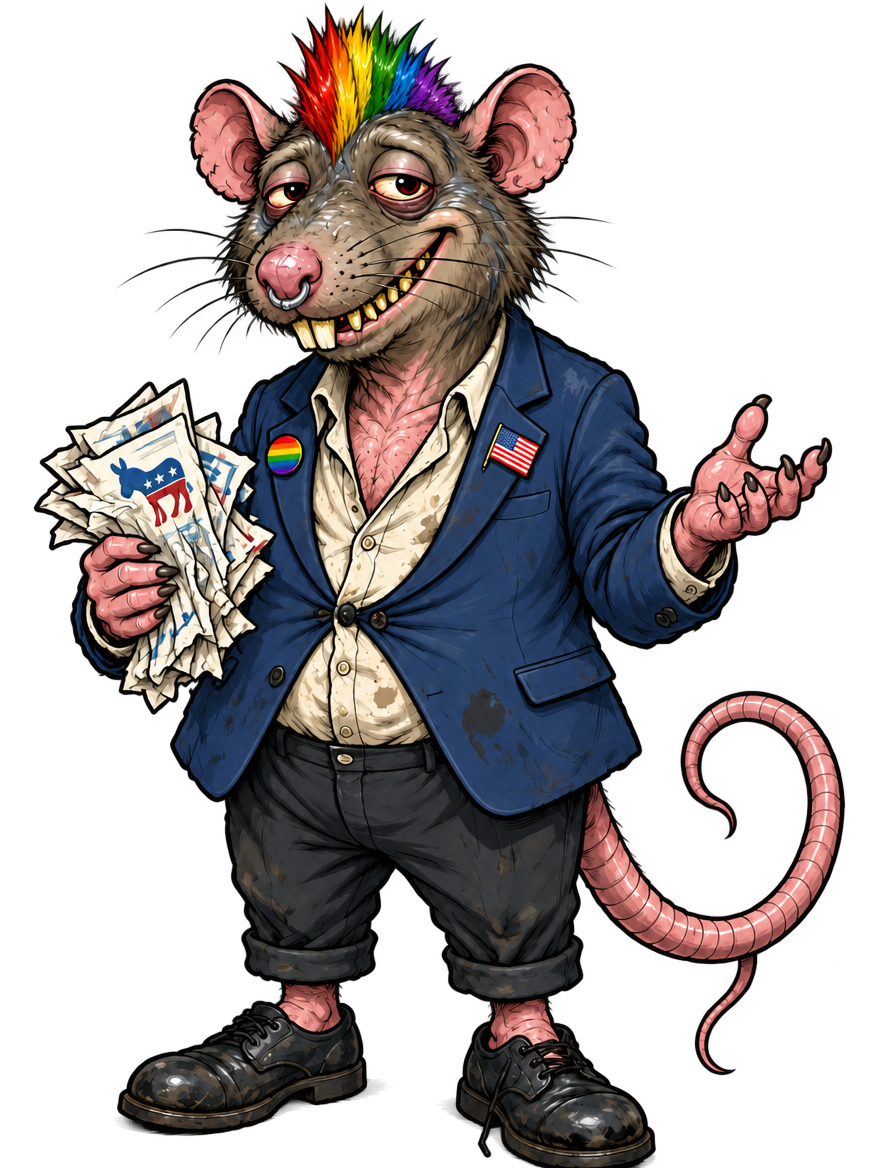
On the sewer scale, this rates three rats out of five. One rat for the countdown, one for "not a big ask" and one for the index card. The other two rats are stockpiling and have asked me not to say where.
To be fair, the government says it's following France, Ireland and the Netherlands. Europe spent 30 years spending its peace dividend. Now it wants you to keep the change, in cash, because the card machine might be down.
So Britain has 1,000 days, a three-year ad campaign and a pantry plan. The war still starts in the pantry. Bring a tin opener.
And here's your bill: a pound of white bread averaged $1.83 in U.S. stores in September, per the Bureau of Labor Statistics. London wants three days of food on your shelf. Washington would settle for you affording one.
This article is satire. The Demorat is a parody news site; real facts are drawn from the linked sources, and jokes, invented scenes, and fictional characters are not real.
The real story that inspired this