
Russia's emergency app spent Monday morning warning Russians of nuclear warheads. Russia's emergency ministry then spent the rest of the morning explaining that the emergency app isn't really for emergencies.
I've seen a lot of government apps crash. This is the first time two countries' panic buttons got pressed by somebody else on the same night.
Here's what's real, per NBC News, Al Jazeera and Fox News. Around 10:45 Sunday night Kyiv time, Ukraine's "Air Alert" app, the one millions of people use to know when to run for a shelter, started sending messages about a radiation hazard, a chemical threat and street fighting. One message, written in Russian, said all of Ukraine was under nuclear alert and added, "Don't worry," because Russia's Oreshnik missile was "in action."
Nothing calms a nation like a nuclear warning that signs off with "don't worry."
Ukraine's Air Force said the app had likely been "compromised by the enemy" and posted, "There is no radiation threat!" In the Lviv region, per NBC, some public sirens and loudspeakers broadcast the radiation signal too. Most Ukrainians figured it out within half an hour, per Al Jazeera, and NBC reports a lot of them responded with memes. One user on X wrote that the hackers "might as well have thrown in a dinosaur attack, too."
That's a country four years into a war. Their threat assessment now includes a joke budget.
Then the same thing happened in Russia. Early Monday, the Russian emergencies ministry said its own app had suffered a "massive cyberattack" that spread "fake information." Per Al Jazeera, the fake alerts claimed nuclear warheads strapped to Ukrainian drones had been launched at every region of the country, and told people to stock up on three weeks of food and hide.
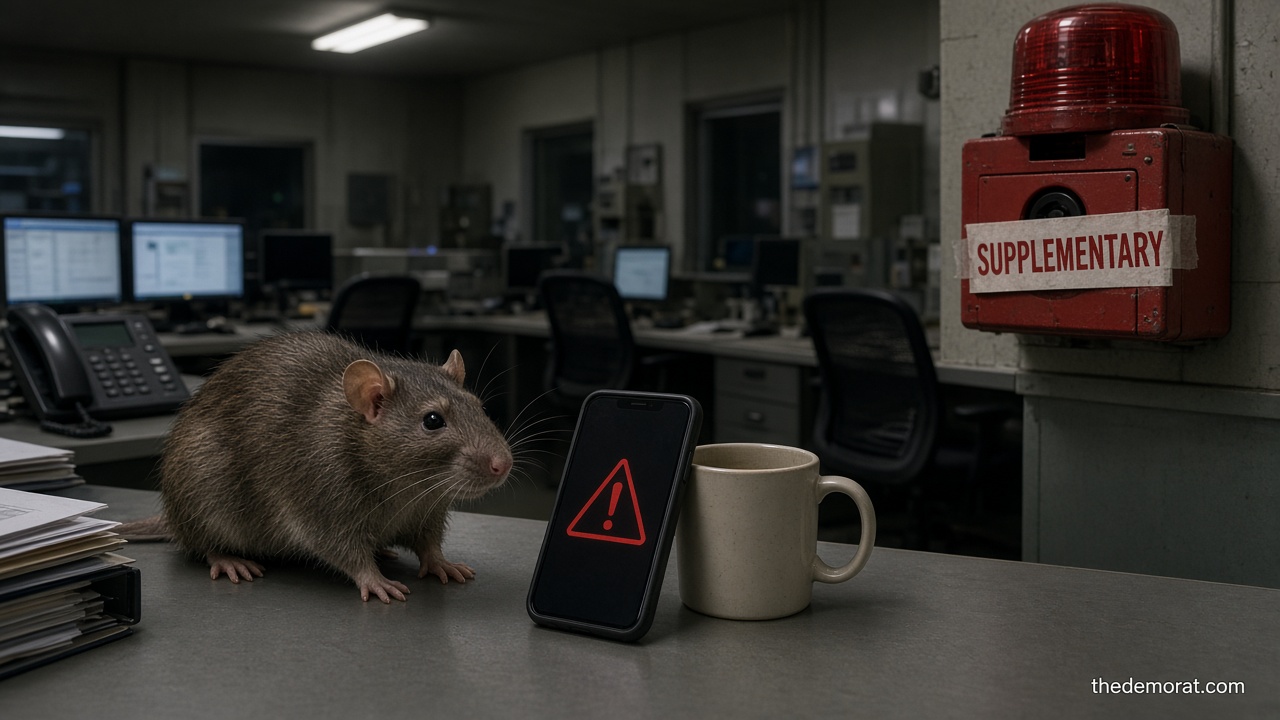
Russia didn't say who did it. NBC reports it isn't clear whether the two hacks are connected. The ministry did, however, rush out the line of the week: the app, it said, was only "an additional, supplementary information service."
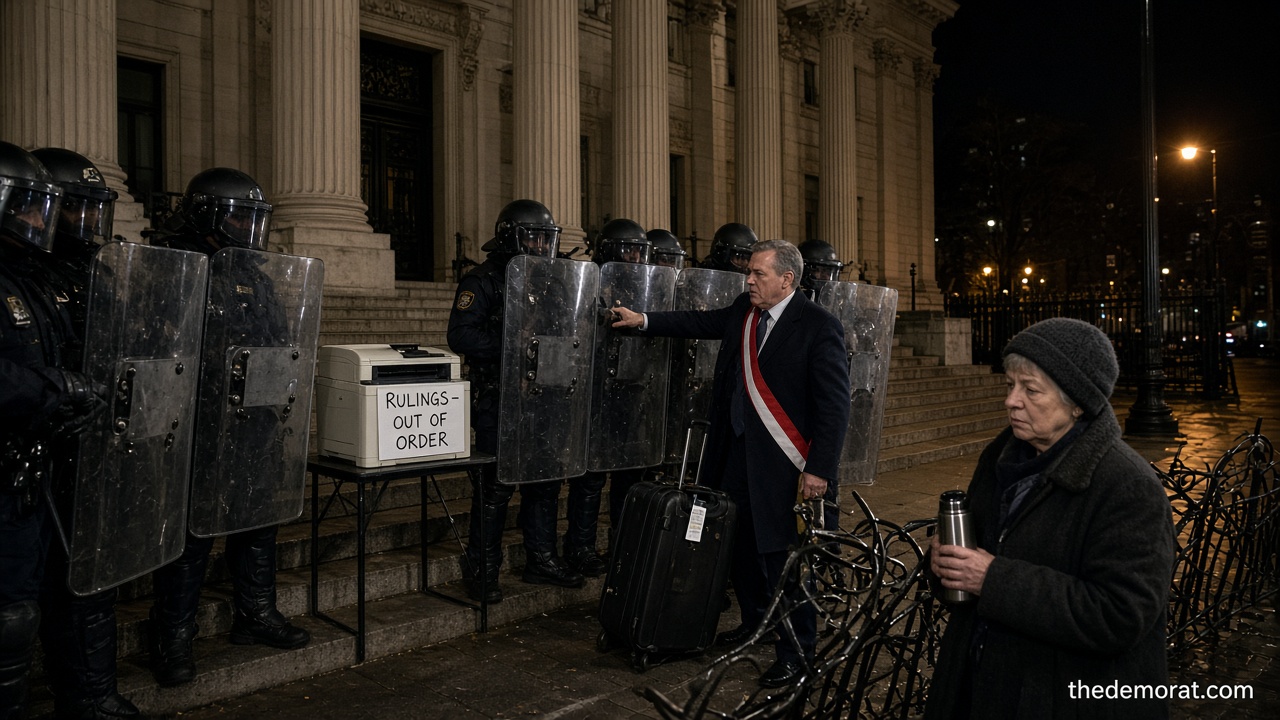
Supplementary. The ministry for emergencies has an emergency app, the app announced an emergency, and the ministry's first move was to downgrade the app to a side dish. That's a fire department telling you the fire alarm was more of a suggestion.
And note what Moscow chose to clarify. Not the nukes. Not the drones. The app's job description. In Russia, the warheads are fake, but the bureaucracy is always real.
Both hacks landed just as a six-day local ceasefire in Russian-occupied Kherson ended, per NBC and Al Jazeera. The peace got six days. The panic got the night shift.
On the sewer scale, I give this four rats out of five. One rat for Russia, where Al Jazeera notes Russian hackers have hit Ukraine's networks for years, finally finding out how it feels. One rat for an emergency ministry calling its own emergency app optional. One rat for a nuclear warning that says "don't worry." One rat for a world where the most honest alert anyone got Sunday night came from a guy on X talking about dinosaurs.
The ministry says its emergency app is supplementary. Russians got the message. Next time there's a real emergency, they'll check something more reliable, like a dinosaur.
And here's your bill: diesel averaged $6.29 a gallon on Nov. 2, per AAA, up from $3.68 a year ago, so if you ever do get told to stock up on three weeks of groceries, the trucks bringing them already charged you for the panic.
This article is satire. The Demorat is a parody news site; real facts are drawn from the linked sources, and jokes, invented scenes, and fictional characters are not real.
The real story that inspired this