
Special Report: This is a straight news report, not satire.
The Pentagon is working to make its major U.S. bases able to keep running without the civilian power grid. New details reported last week put a number on that goal, 90 days, but that figure comes from one Fox News report. A Pentagon spokesman shared the Fox report, but the department hasn't formally confirmed the 90-day figure. Here is what is known, what is not, and what households are actually advised to do.
What the Pentagon announced
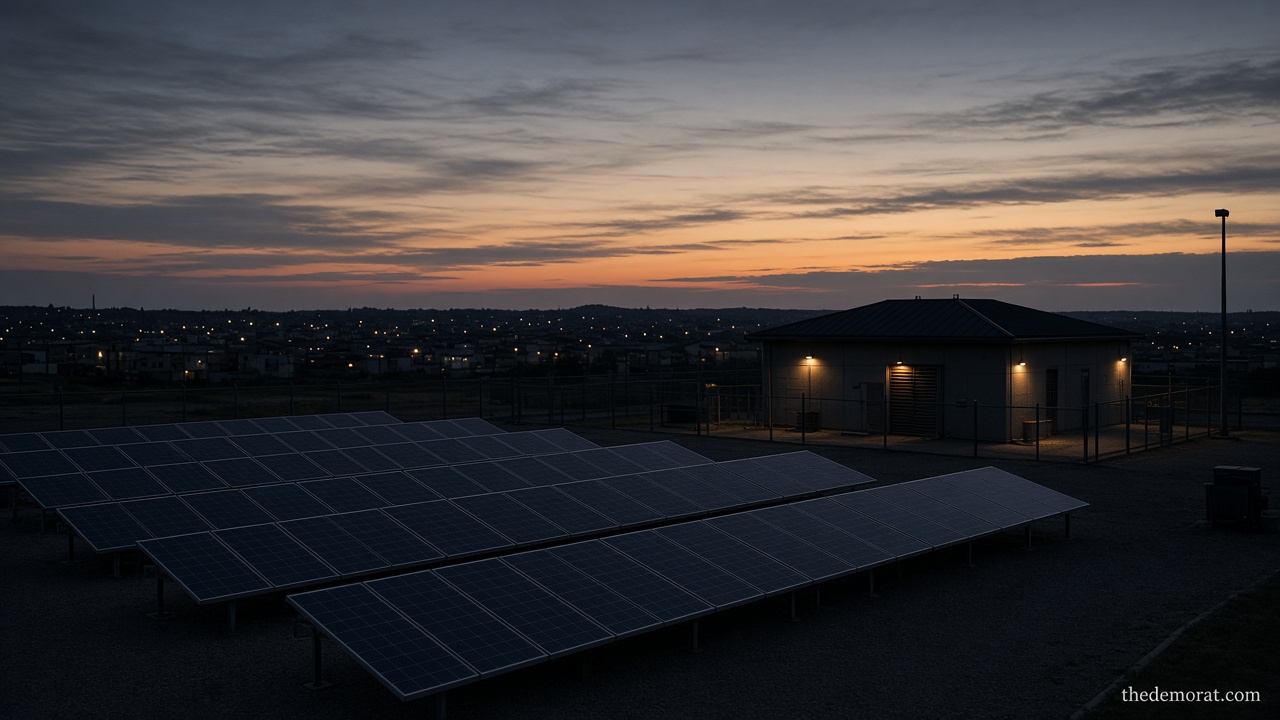
On Sept. 30, Defense Secretary Pete Hegseth announced a program called FORTRESS America in a speech at Quantico and a Defense Department memo. "Every major military installation in America is going to generate its own power, independent of the civilian grid," he said. The program has five parts: energy independence, the supply chain and industrial base, a strategic defense reserve, hardening installations against physical and cyber threats, and space and spectrum. A follow-up memo on Oct. 6-7 set up a FORTRESS Program Office, according to DefenseScoop.
This is military readiness planning. No U.S. agency has said a 90-day civilian blackout is coming. Federal law already requires the military to keep power available for critical missions 99.9 percent of the time by fiscal 2030, and the Army picked sites for small nuclear reactors in August.
Where the 90 days comes from
Fox News Digital reported Oct. 23-25, citing documents it reviewed, that every major base in the continental U.S. would be expected to sustain essential operations, including power, water, fuel and communications, for at least 90 days. Pentagon spokesman Sean Parnell shared the Fox report, but the department hasn't formally confirmed the 90-day figure or published it. Snopes rated the claim "mostly true" on Oct. 26.
What other countries tell households
Several governments have updated their home-preparedness advice in recent years. None says 90 days. Germany suggests supplies for 10 days if possible, and at least three. Sweden, Norway and Switzerland advise about a week. Japan says at least three days, ideally a week. Finland and the European Union's 2025 preparedness strategy use 72 hours. In the U.S., Ready.gov recommends several days of supplies.
How many people could die? No one knows
There is no official or peer-reviewed estimate of deaths from a 90-day nationwide U.S. outage. The widely shared claim that 90 percent of Americans would die within a year does not come from the 2008 EMP Commission report, which gives no death figure. It traces to congressional testimony, including an answer that drew on the novel "One Second After." A 2019 peer-reviewed review found no model or primary source behind it.
Real outages give a sense of the risk. The 2003 New York City blackout, lasting about one to two days, was linked to about 90 excess deaths, according to a study in the journal Epidemiology. The February 2021 Texas freeze was linked to about 702 excess deaths in a week, according to a BuzzFeed News analysis, compared with an official state count of 246. In Puerto Rico, Hurricane Maria and the months-long outage that followed were linked to 2,975 excess deaths over six months, a George Washington University estimate that is now the official toll. A nationwide 90-day outage has no precedent, and its toll is unknown.
What you can do
Ready.gov and the American Red Cross recommend steps that help in any outage:
- Keep several days of water, one gallon per person per day, and non-perishable food.
- Have flashlights, extra batteries and a battery-powered or hand-crank radio.
- Plan backup power for medical devices.
- Run generators only outdoors, away from windows, because of carbon monoxide.
- Keep the refrigerator and freezer closed.
- Build a kit, make a family plan and stay informed through local alerts.
Guidance: Ready.gov power outages and Red Cross: how to prepare.
Special Report: This is a straight news report, not satire. Facts are drawn from the linked sources.
The real story that inspired this